Seeddb.bin !!link!! ❲HOT – 2024❳

Nevertheless, the file presents a risk surface for if weak DPAPI master keys are used. Moreover, malware that operates under a logged-in user context can read the decrypted contents in memory, exfiltrating seeds that might assist in token theft. Thus, while seeddb.bin is not a password store, it is a high-value target for advanced persistent threats focused on identity compromise.

Specifically, seeddb.bin is often found in directories such as C:\Windows\System32\config\systemprofile\AppData\Local\Microsoft\IdentityStore\ or within user-specific AppData folders. Its purpose is to cache cryptographic nonces, endpoint URLs, token serialization parameters, and versioning information for the Web Account Manager (WAM) system. By storing these seeds locally, the operating system avoids repeated network round-trips to validate the identity provider’s configuration, thus accelerating authentication flows for applications like Mail, Calendar, and third-party apps using Microsoft login. seeddb.bin

From a defensive perspective, administrators should treat seeddb.bin with the same care as registry hives or SAM files. It should be included in regular backup verification, monitored for unexpected changes via file integrity monitoring tools, and securely wiped during decommissioning procedures. Working with seeddb.bin is not straightforward. Its binary schema is undocumented by Microsoft, meaning forensic tools must reverse-engineer its structure, which often changes with Windows updates. As a result, open-source tools lag behind commercial forensic suites. Additionally, the file can be locked by the operating system during active use, requiring a forensic image or offline boot for acquisition. Finally, encryption via DPAPI demands that the analyst also have access to the user’s master key or a memory dump containing the decryption key—a non-trivial requirement in live investigations. Conclusion seeddb.bin exemplifies the principle that in digital systems, even the most mundane-seeming files can hold profound technical and evidentiary weight. It is neither a core system binary nor a user-accessible document, yet it orchestrates critical authentication bootstrapping, preserves forensic artifacts across user sessions, and introduces distinct security considerations. For the forensic analyst, it is a silent witness to identity management; for the security engineer, a checkpoint in threat modeling; and for the curious technologist, a reminder that data is always more than its extension. As cloud integration deepens and authentication becomes ever more seamless, files like seeddb.bin will only grow in relevance, quietly arbitrating the relationship between user, device, and identity provider. Understanding them is not a niche skill—it is essential literacy for the modern digital age. Nevertheless, the file presents a risk surface for

In the vast, intricate ecosystem of a modern operating system, countless files work silently in the background, their purposes known only to developers and forensic analysts. Among these unsung components is seeddb.bin . At first glance, it appears as an innocuous binary file—just another dataset among millions. However, a deeper examination reveals seeddb.bin as a critical artifact, serving as a cornerstone for system security, application behavior prediction, and evidentiary reconstruction in digital investigations. This essay explores the technical function, forensic significance, and broader security implications of seeddb.bin , arguing that this small file is a powerful testament to how non-executable data shapes the digital landscape. Technical Foundation: What is seeddb.bin ? Primarily associated with the Windows operating system, particularly in the context of the Microsoft Entra (formerly Azure AD) Authentication and Microsoft Account sign-in assistants, seeddb.bin is a database file that contains precomputed "seed" values. These seeds are not random numbers in the cryptographic sense but rather deterministic identifiers or configuration blobs used for bootstrapping communication between a local machine and Microsoft’s cloud identity services. Specifically, seeddb

User Reviews from Trustpilot

WT
Wilma Tanaskoska NL
Star Star Star Star Star
I use this program almost every day as a restored old photograph/coloured image shows so much more and adds depth to the image than the original. It definitely enhances the look of the website and book I am working on. It is easy to use. The support I received when there was a problem was adequate and friendly.
BD
Bob D. US
Star Star Star Star Star
PhotoGlory is an excellent photo restoration program with an incredibly user-friendly workflow. It does an outstanding job of reviving old or damaged photos. I wish I had discovered PhotoGlory sooner, as it would have saved me a significant amount of money I wasted on inferior photo editing products.
KU
Kurt US
Star Star Star Star Star
I am in the process of digitizing 100 years of family photos, slides and film. Using Photoglory has been a great addition to my collection of photo management and editing software. All my scanners are supported as well as my preferred photo format.
LI
Lisette AU
Star Star Star Star Star
I am relatively new to professional photography and in my search for a software program to edit and restore my old photos for my special project, I discovered Photoglory. I am very impressed with this software as it is incredibly powerful yet intuitive to use, making editing and restoring my photos a breeze. The range of tools and filters is extensive, allowing me to enhance and perfect my photos with precision. What sets Photoglory apart is its seamless integration with my workflow, saving me both time and effort. I highly recommend Photoglory for its versatility and exceptional results.
LI
Linden AU
Star Star Star Star Star
I have many old family photos dating back to the 1920's. Most are B&W and it's very pleasing to see my relatives in colour. Some photos are in poor condition but this program restores them to a very respectable level. It is very easy to use and now I have had requests from others, who have seen the results, to help restore some of their's. Very impressive.
BN
Bryce Nolting US
Star Star Star Star Star
I have been using various photo software editing tools such as PhotoShop, Cyberlink Photo Directors, and others to enhance, update and repair software. This software delivers what it promised. I had several badly damaged photos, stains, scratches, tears, discolored pictures from several decades ago from slides, paper prints, polaroids that needed restoring. I used photoglory to restore the pictures to almost new, then used my other software to retouch and they came out looking fantastic.
WA
Waldemar PL
Star Star Star Star Star
I am passionate about old photos that I discover in my family and in old bazaars. This program allowed me to restore the former glory to photos taken 60 or even 80 years ago. The program is simple and intuitive. Thanks to him, the world of photography went back to the last century, bringing a smile to your face. I'm adding my 6th star to the 5 stars.
About the program
Version: 7.0
Version number
File size: 93.7 Mb
Fle size
Interface language: English
Language
Price: from $19.25
OrderOrder
System requirements
OS: Windows 11, 10, 8, 7
OS
CPU: 1 GHz or faster (Intel, AMD)
CPU
RAM: 4 GB or more
RAM
Hard drive space: min. 500 MB
HDD

See What’s New in the Latest Version

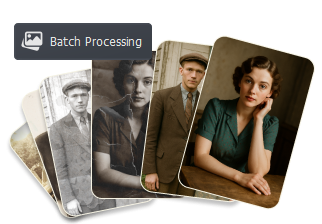
seeddb.bin Restore & colorize dozens of photos in batch
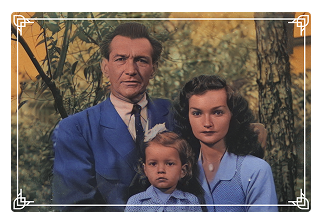
seeddb.bin Add elegant picture frames and customize their look
seeddb.bin Try new designer text styles and vintage text frames
seeddb.bin Enjoy a new pack of vintage design elements
seeddb.bin Create text in different shapes - circle, curve, arch

Frequently Asked Questions

What is the best photo restoration software for 2026?

If you need user-friendly software with lots of automatic tools, then PhotoGlory might be your best choice. It is developed with beginners in mind and offers features like instant colorization and restoration, 100+ filters, and powerful tools for manual editing.

What are the top AI photo restoration tools for old damaged photos?

To restore old photos online, you can use LetsEnhance. For mobile devices, FixMyPics is considered one of the best apps. As for desktop photo restoration, give PhotoGlory a try — it’s easy to use and works smoothly even on older computers.

Are there any key features of photo restoration software to look for before installation?

Definitely! For starters, make sure it’s compatible with your operating system. Next, check out if the software has AI-powered tools or not — they’ll make the restoration process easier for you. It’s also a positive sign if software lets you easily preview the changes, save pictures in popular formats, and navigate through its menus effortlessly. By the way, you can find it all in PhotoGlory!

How does AI photo restoration work?

The AI technology utilizes learning models trained on a huge database of paired images. In photo restoration, smart algorithms spot the damage type and fix it naturally. AI can also be integrated in the colorization feature. It analyzes the patterns and context of an image based on which realistic colors are applied. PhotoGlory features AI-powered tools, too. There are manual tools as well so you can tweak the images yourself if needed.

PhotoGlory

Get Started with PhotoGlory Today

Download this photo restoration software for free!

  • Turn black and white pictures into colored
  • Erase all the defects from an old photograph
  • Boost faded colors & restore clarity to your pics
  • Stylize your images with 100+ vintage filters