Beyond the Rainbow: The Integral Role of the Transgender Community in LGBTQ Culture
However, the relationship between the transgender community and broader LGBTQ culture has not been without tension. A persistent "LGB without the T" faction argues that the struggles for sexual orientation and gender identity are fundamentally different, and that trans issues are too politically contentious or too complex for mainstream advocacy. This schism represents a dangerous amnesia. It forgets that the first Pride was a riot led by trans people and that the legal arguments used to decriminalize homosexuality (privacy, bodily autonomy) are the very same used to secure trans healthcare and legal recognition. When segments of the LGBTQ community capitulate to anti-trans rhetoric, they betray their own history and weaken the entire coalition. The lesson of Stonewall is that solidarity, not selective inclusion, is the source of political power.
In conclusion, the transgender community is not a peripheral subcategory of LGBTQ culture; it is a core component of its past, present, and future. From igniting the uprising at Stonewall to expanding the movement’s philosophical and artistic horizons, trans people have repeatedly pushed the larger community toward greater courage and authenticity. The ongoing attacks on transgender rights—from bathroom bills to healthcare bans—are not a distraction from the fight for LGBTQ equality; they are the frontline of that fight today. To truly honor LGBTQ culture is to recognize that the rainbow loses its meaning without the "T," for a movement that abandons its most vulnerable members in a moment of crisis has abandoned the very principle of liberation on which it was built. The future of the rainbow depends on standing, unwaveringly, with the trans community.
Culturally, the transgender community has profoundly enriched LGBTQ identity, art, and language. The concepts that underpin modern queer theory—such as the distinction between sex, gender, and sexuality—have been articulated most clearly by trans thinkers and artists. The evolution of the rainbow flag, for instance, now often includes the "Progress" chevron featuring light blue, pink, and white stripes to explicitly center trans people. In media and performance, from the underground ballroom culture documented in Paris is Burning (a scene built by trans women and gay men of color) to contemporary figures like Laverne Cox, Janelle Monáe, and Elliot Page, trans narratives have pushed the culture to embrace fluidity and complexity. This has, in turn, challenged rigid stereotypes within the gay and lesbian communities themselves, fostering a more nuanced understanding of identity that benefits everyone under the rainbow.
Historically, the transgender community, particularly trans women of color, were central figures in the pivotal moments that ignited the modern LGBTQ rights movement. The 1969 Stonewall Uprising, long cited as the birth of the gay liberation movement, was led by individuals like Marsha P. Johnson and Sylvia Rivera. Johnson, a self-identified transvestite and gay liberation activist, and Rivera, a Latina trans woman, were not passive participants but active resisters against police brutality. Their visibility and defiance shattered the "homophile" strategy of quiet assimilation that had dominated earlier gay rights organizations. By refusing to remain in the shadows, they established a core tenet of LGBTQ culture: radical authenticity and the rejection of respectability politics. This historical truth demonstrates that transgender resistance did not simply support the LGBTQ movement; it defined its most rebellious and transformative spirit.
Ebonyshemale < 99% EASY >
Beyond the Rainbow: The Integral Role of the Transgender Community in LGBTQ Culture
However, the relationship between the transgender community and broader LGBTQ culture has not been without tension. A persistent "LGB without the T" faction argues that the struggles for sexual orientation and gender identity are fundamentally different, and that trans issues are too politically contentious or too complex for mainstream advocacy. This schism represents a dangerous amnesia. It forgets that the first Pride was a riot led by trans people and that the legal arguments used to decriminalize homosexuality (privacy, bodily autonomy) are the very same used to secure trans healthcare and legal recognition. When segments of the LGBTQ community capitulate to anti-trans rhetoric, they betray their own history and weaken the entire coalition. The lesson of Stonewall is that solidarity, not selective inclusion, is the source of political power. ebonyshemale
In conclusion, the transgender community is not a peripheral subcategory of LGBTQ culture; it is a core component of its past, present, and future. From igniting the uprising at Stonewall to expanding the movement’s philosophical and artistic horizons, trans people have repeatedly pushed the larger community toward greater courage and authenticity. The ongoing attacks on transgender rights—from bathroom bills to healthcare bans—are not a distraction from the fight for LGBTQ equality; they are the frontline of that fight today. To truly honor LGBTQ culture is to recognize that the rainbow loses its meaning without the "T," for a movement that abandons its most vulnerable members in a moment of crisis has abandoned the very principle of liberation on which it was built. The future of the rainbow depends on standing, unwaveringly, with the trans community. Beyond the Rainbow: The Integral Role of the
Culturally, the transgender community has profoundly enriched LGBTQ identity, art, and language. The concepts that underpin modern queer theory—such as the distinction between sex, gender, and sexuality—have been articulated most clearly by trans thinkers and artists. The evolution of the rainbow flag, for instance, now often includes the "Progress" chevron featuring light blue, pink, and white stripes to explicitly center trans people. In media and performance, from the underground ballroom culture documented in Paris is Burning (a scene built by trans women and gay men of color) to contemporary figures like Laverne Cox, Janelle Monáe, and Elliot Page, trans narratives have pushed the culture to embrace fluidity and complexity. This has, in turn, challenged rigid stereotypes within the gay and lesbian communities themselves, fostering a more nuanced understanding of identity that benefits everyone under the rainbow. It forgets that the first Pride was a
Historically, the transgender community, particularly trans women of color, were central figures in the pivotal moments that ignited the modern LGBTQ rights movement. The 1969 Stonewall Uprising, long cited as the birth of the gay liberation movement, was led by individuals like Marsha P. Johnson and Sylvia Rivera. Johnson, a self-identified transvestite and gay liberation activist, and Rivera, a Latina trans woman, were not passive participants but active resisters against police brutality. Their visibility and defiance shattered the "homophile" strategy of quiet assimilation that had dominated earlier gay rights organizations. By refusing to remain in the shadows, they established a core tenet of LGBTQ culture: radical authenticity and the rejection of respectability politics. This historical truth demonstrates that transgender resistance did not simply support the LGBTQ movement; it defined its most rebellious and transformative spirit.
Personalized One on One Chats
Omegle's chat rooms are designed for intimate conversations between you and
your match. By focusing solely on you, it creates an immersive experience where your partner's undivided
attention is directed towards you. Moreover, the platform ensures that you won't be matched with the same
partner again, adding variety to your interactions.
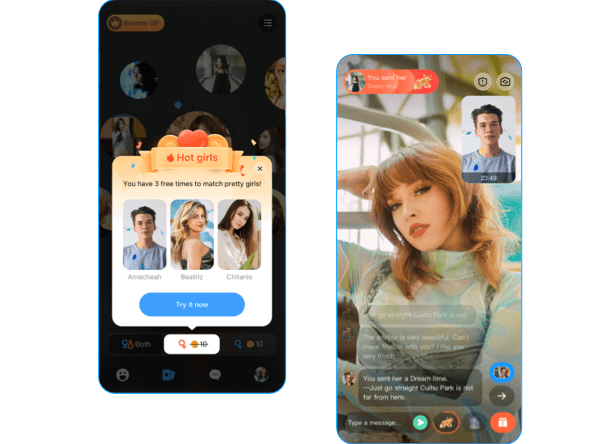
Omegle Free Random Video Chat
You can use Omegle’s video chat for any purpose you like, just like
countless other people. At any given time, you can easily find tens of thousands of people online.
Therefore, there is no chance that you won’t find your perfect match.
Omegle on PC & Mobile
Whether you're using a desktop computer, mobile phone, or tablet, Omegle
works effortlessly across all web browsers. It ensures compatibility with various devices, allowing you to
access the platform from anywhere at any time.
What is Omegle?
Omegle is a popular random video chat platform utilized by millions of users worldwide to connect with online
chat partners. It serves as a versatile platform where people can forge new friendships, engage in
discussions, pursue dating opportunities, engage in flirting, or simply have lighthearted fun without any
commitments.
By utilizing Omegle, users gain access to a diverse pool of individuals who are seeking similar experiences.
The platform offers the convenience of anonymous video chatting, allowing users to connect with girls with
just a single click, while maintaining complete anonymity. The matching process is swift and efficient,
facilitating a continuous stream of potential matches one after another.
![Random Video Chat Features]()

Start Video Chat